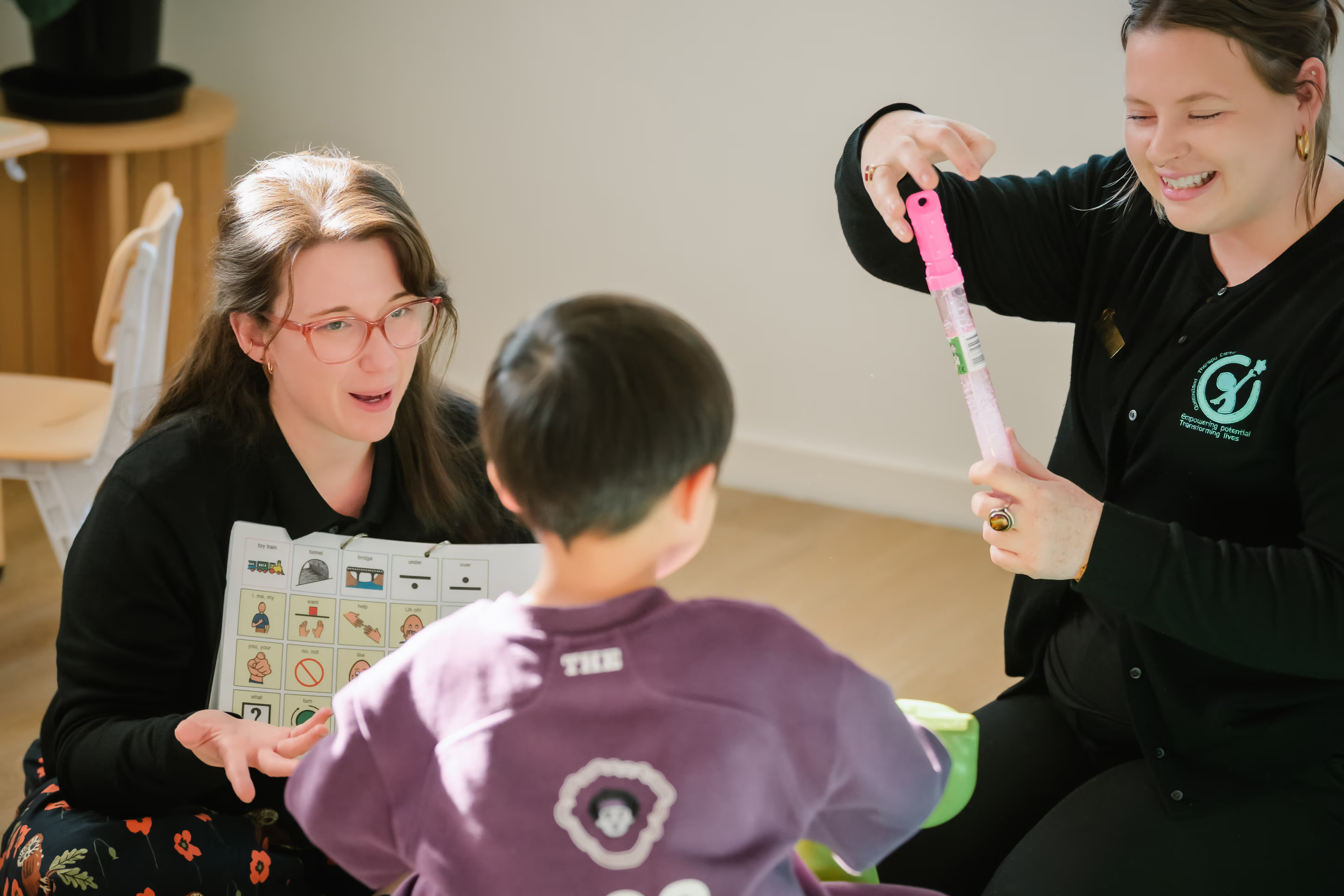
Communication is one of the most important skills a child develops in their early years. It forms the foundation for learning, forming friendships, and navigating the world around them. But how do you know when your child's speech or language development needs a little extra support? Many parents notice something feels different but aren't always sure whether to act or wait and see.
At Queensland Therapy Center, we work with children across a wide range of communication needs, and we believe that early intervention is almost always beneficial. The sooner a child receives the right support, the better the outcomes tend to be. That said, every child develops at their own pace, and recognising the signs early can be the difference between a small hurdle and a larger challenge down the track.
Developmental Milestones to Watch
Speech and language development follows a broadly predictable path in the early years. By 12 months, most children are babbling and using simple sounds like "mama" or "dada". By 18 months, they typically say 6 to 20 single words. By age 2, most children are combining two words together, and by age 3 they are speaking in short sentences that family and friends can mostly understand.
If your child is significantly behind these milestones, it's worth speaking to a speech pathologist. That said, milestones are a guide, not a strict rule. What matters most is the pattern of development over time, not a single snapshot.
Key Signs to Look Out For
There are several specific signs that may suggest your child would benefit from speech therapy. These include: limited vocabulary for their age, difficulty putting words together into sentences, being hard to understand even by familiar adults, frustration or withdrawal when they can't communicate what they need, avoiding social situations or conversations with other children, difficulty following simple instructions, and stuttering or struggling to get words out smoothly.
You might also notice that your child relies heavily on gestures rather than words, or that they seem to understand what you're saying but struggle to respond verbally. These are all valuable signals worth exploring with a professional.
Social Communication Difficulties
Speech therapy isn't only about articulation or vocabulary. Social communication (the way children use language in social situations) is an equally important area. Some children have strong vocabularies but struggle to use language in back-and-forth conversation, read social cues, stay on topic, or understand humour and sarcasm.
Children with autism spectrum disorder often experience social communication difficulties alongside other speech and language needs. A speech pathologist with experience in this area can work with your child on both the structural and social elements of communication in tandem. Our article on speech therapy for autism explains this in more detail.
What Happens in a Speech Therapy Assessment?
If you're concerned about your child's communication, the first step is a comprehensive assessment with a speech pathologist. At Queensland Therapy Center, our assessments are relaxed, child-friendly, and designed to give us a thorough picture of your child's strengths and areas for growth.
From there, we'll share our findings clearly and collaboratively, explaining what we observed, what it means, and what we recommend. If therapy is beneficial, we'll develop a personalised plan together: one that fits your child's needs, your family's routine, and the goals that matter most to you.
You Don't Have to Wait and See
One of the most common things parents tell us is that they wish they'd reached out sooner. If you have a concern, no matter how small it seems, we'd always rather have a conversation early than have a family wait until a challenge becomes more complex to address. Early support changes trajectories.
If any of the signs above sound familiar, or if you simply have a gut feeling that something isn't quite right, please reach out to us. Our speech pathology team at Queensland Therapy Center is here to help, and a conversation costs nothing.
Get Support
Ready to take the next step?
Our team is here to help. Book a session or reach out with any questions.
Contact Us
Appointment
Ready to book your first session?
We'd love to hear from you. Whether you have questions or you're ready to get started, just reach out — we're here to help.