Speech Therapy for Autism: A Guide for Families and Autistic Adults
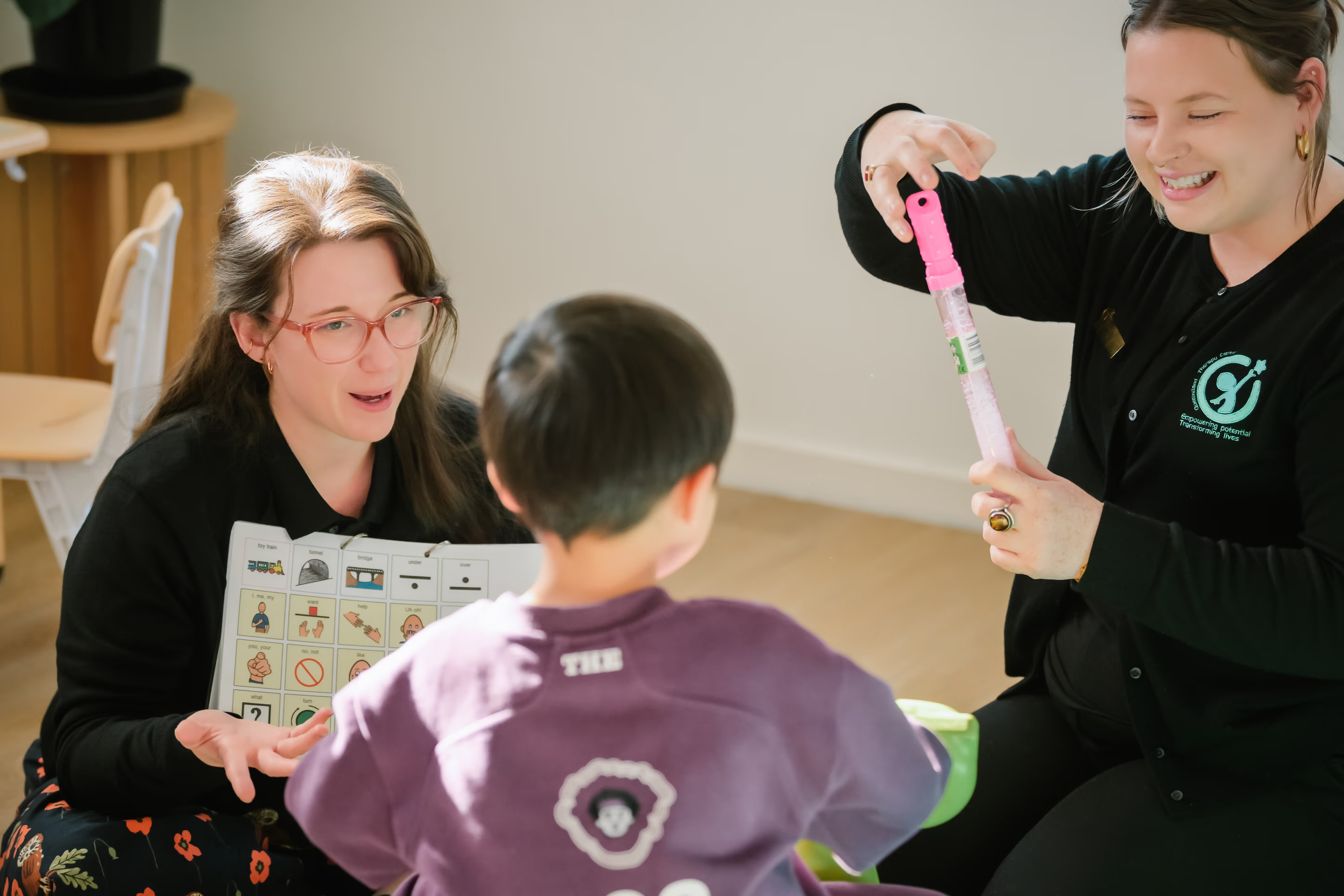
Speech therapy for autism is support from a speech pathologist (often called a speech therapist) to help autistic people communicate in the ways that work for them. That might mean understanding what others say, building spoken language, using signs, pictures or a speech-generating device, or joining in with play and conversation with family and friends.
Speech therapy doesn't aim to "cure" autism or make someone seem less autistic. Speech Pathology Australia says good practice works with the person, the people around them and their environment, and respects each person's right to communicate in the way they choose. This guide explains what it involves, what the evidence says about common approaches, and how to pay for it in 2026.
What a speech pathologist works on with autistic children
Some autistic children talk a lot, some use a few words, and some don't use speech. Raising Children Network notes that autistic children sometimes communicate differently from non-autistic children, and this is OK. Depending on the goals you set together, speech therapy might focus on:
- Understanding language: following what others say at home, kindy or school.
- Expressing needs and ideas: with words, signs, pictures, a device, or a mix of these.
- Social communication: sharing attention, taking turns and connecting with others, on the child's own terms.
- Play: joining in with play the child enjoys, and building communication inside it.
- Augmentative and alternative communication (AAC): finding and learning a system that works.
- The people around the child: helping family and teachers understand and respond to the way the child communicates.
Much of this happens through play and everyday routines. A speech pathologist might follow the child's lead, pause to give them time to communicate, offer choices, or model words and signs at a level just above what the child uses now. Parents learn the same strategies to use at home. Our guide to what a speech pathologist does covers the profession more broadly.
Speech therapy for autistic teenagers and adults
Speech pathologists work with autistic people across the lifespan, not only young children. For teenagers and adults, goals are set with the person and might include:
- conversation and social communication, in ways that feel comfortable rather than forced;
- communicating at school, study, work or health appointments;
- using AAC some or all of the time, for example with new people or in new places;
- getting more out of an AAC system you already use;
- helping family, friends or workmates understand and respond to the way you communicate.
What happens at a first speech pathology assessment
In the first session or two, the speech pathologist gets to know the person and how they communicate now. That usually includes:
- talking with the family, or with the adult themselves, about strengths, interests, routines and concerns;
- watching how the person communicates during play, conversation or everyday tasks;
- using standard assessments where they help;
- reading reports from doctors, teachers or other therapists.
A child who repeats a phrase from a favourite show (called echolalia), or takes your hand to the thing they want, may be trying to tell you something. Raising Children suggests support can start with working out how and why a child communicates now.
You then agree on goals that matter to the person and family, written down so everyone understands them. Progress is checked along the way, and supports are adjusted, or stopped when they are no longer needed or wanted.
AAC: communicating without relying on speech
AAC means any way of communicating other than speech. It can support spoken words or be used in their place. There are several kinds:
- Unaided AAC: gestures and signs, such as Key Word Sign, which uses signs from Auslan alongside spoken words.
- Low-tech AAC: picture cards, communication boards and books, visual schedules, and the Picture Exchange Communication System (PECS).
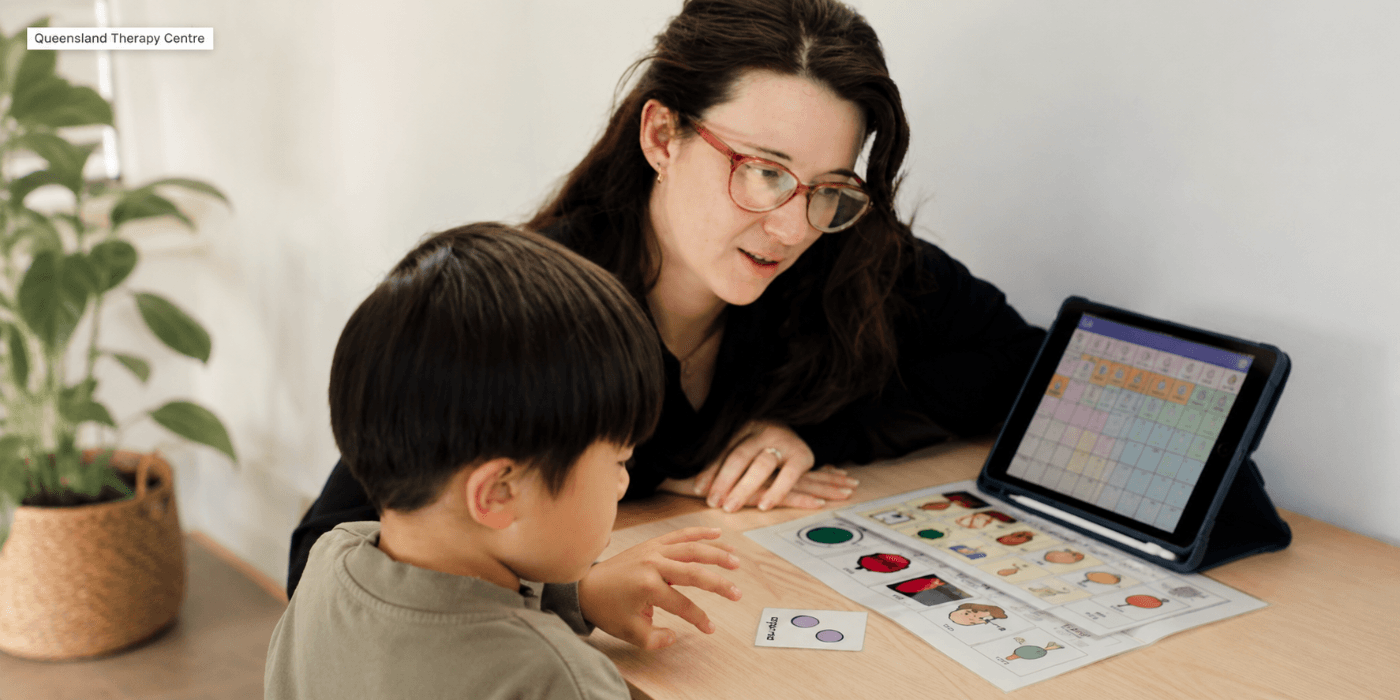
- High-tech AAC: speech-generating devices, and communication apps on tablets or phones.
Many people use more than one kind. A speech pathologist can help you try options, choose a system that suits the person's strengths, set it up, and teach the people around them to use it too.
A common worry is that AAC will stop a child from learning to talk. Speech Pathology Australia and Raising Children both say it doesn't interfere with spoken language, and Speech Pathology Australia adds that AAC can help speech develop. AAC is also a complete way to communicate in its own right, not only a step towards speech.
What the evidence says about common approaches
Raising Children Network's guide to therapies for autistic children rates each approach on its research: established (research shows positive effects), promising (some positive research, more needed), yet to be determined, or ineffective/harmful. Speech Pathology Australia notes that no single support works best for every autistic person. As at October 2026, the ratings for common communication approaches are:
- AAC: PECS, speech-generating devices and Key Word Sign are rated promising. For PECS, the clearest evidence is for its early stages, where children learn to ask for things.
- Parent-mediated programs: these coach parents to use communication strategies in daily life. The Hanen More Than Words program, for parents of autistic children younger than 6, is rated promising. Paediatric Autism Communication Therapy (PACT) is rated established. An Autism CRC review of the evidence found that active caregiver involvement had a similar, and at times greater, effect on children's outcomes than therapy from professionals alone.
- Naturalistic developmental behavioural interventions: these teach through play and everyday routines, following the child's interests. JASPER (for children aged 1 to 8), the Early Start Denver Model (for toddlers and preschoolers) and Pivotal Response Treatment are rated established. Raising Children also notes that some autistic people feel therapies targeting play skills don't respect neurodiversity, and suggests children keep time for the play they naturally enjoy.
- Social communication approaches: the developmental social-pragmatic model and social stories are rated promising, and most social story studies are small. Visual supports and video modelling are rated established.
- Facilitated communication: a helper supports the person's hand or arm, or holds the letter board, while they spell out words. Raising Children includes the rapid prompting method and spelling to communicate (S2C) here, and rates facilitated communication as ineffective, and says it can be harmful. Speech Pathology Australia is among the organisations that recommend it not be used.
Most of this research is with young children, so much less is known about teenagers and adults. Some programs, including More Than Words and JASPER, can only be delivered by therapists certified in that program.
If a speech pathologist suggests an approach, it is reasonable to ask: what is the goal, how will we know if it's helping, how long will we try it, and are there any risks?
What neurodiversity-affirming speech therapy looks like
Speech Pathology Australia's position statement on working with autistic people says speech pathologists must work in neurodiversity-affirming ways, and Australia's national guideline for supporting autistic children describes good practice. In speech therapy, that means:
- starting from the person's strengths and interests;
- valuing every form of communication, including speech, signs, pictures, devices, gestures and echolalia;
- choosing goals that are meaningful to the person and family, not goals that only make someone look less autistic;
- changing the environment and supporting the people around the person, not only building the person's skills;
- involving children in decisions about their support, and respecting when they say no, however they communicate it;
- working in partnership with families, teachers and other professionals.
Language is changing too. The national guideline uses identity-first language ("autistic person"), which many autistic people prefer, while others prefer "person on the autism spectrum" or "person with autism". A good speech pathologist will ask what you or your child prefers.
Paying for speech therapy: NDIS, early childhood and Medicare
Autism speech therapy can be funded in several ways. These are the main routes as at October 2026:
- NDIS: speech therapy is usually paid for from the Capacity Building budget, under Improved Daily Living, which the NDIS says can include speech therapy to help with communication. For plans created or reassessed from 1 October 2026, or renewed from 1 February 2027, the NDIA is reducing budgets in this category.
- Children younger than 9: the NDIS early childhood approach connects families with an early childhood partner, who can help even if a child isn't eligible for the NDIS. Children younger than 6 don't need a diagnosis.
- Thriving Kids: a new program outside the NDIS for children aged 8 and under with developmental delay or autism and low to moderate support needs. It started in October 2026, and supports such as allied health are being added over time, with all supports due by 1 January 2028. As at mid-October 2026, Queensland's local services had not been announced. NDIS access doesn't change until 1 January 2028.
- Medicare for people under 25: for autism and other complex neurodevelopmental conditions, a paediatrician or psychiatrist can write a treatment and management plan and refer you to a speech pathologist. Medicare then pays a rebate towards up to 20 treatment sessions in a lifetime, shared across speech pathology, occupational therapy and other allied health. Ask the clinic you choose whether they accept these referrals.
Our article on NDIS funding for autism explains the 2026 changes in more detail.
How to choose a speech pathologist for autism
- Look for CPSP. Speech pathology is self-regulated in Australia, and "speech pathologist" isn't a protected title. A Certified Practising Speech Pathologist (CPSP) meets Speech Pathology Australia's professional standards, and Medicare and private health insurance require it for rebates. You can search Speech Pathology Australia's Find a Speech Pathologist directory.
- Ask about experience with autistic people of a similar age and way of communicating, including AAC if it's relevant.
- Ask how goals are set and measured, and how often progress is reviewed.
- Ask how they work with others, such as occupational therapists, behaviour support practitioners and teachers.
- Ask where sessions happen, for example at a clinic, at home, or at kindy or school.
Speech therapy for autism at Queensland Therapy Center
Our speech pathologists in Runcorn work with autistic children from age 2, teenagers and adults, at our clinic or at home, school or kindy across Brisbane's southside. Our team includes Certified Practising Speech Pathologists, as well as occupational therapists and behaviour support, so we can set shared goals across therapies. As our autism support page explains, that includes building spoken and non-spoken communication, with AAC such as picture systems and devices, in ways that suit the person.
We are a registered NDIS provider and work with participants whose plans are NDIA-managed, plan-managed or self-managed. Private clients are welcome. You don't need a referral to book, and support coordinators and health professionals can use our referral form.
Frequently asked questions
Does speech therapy help autistic children?
Several approaches speech pathologists use have research showing positive effects on communication, including some parent-mediated and play-based programs for young children. No single approach suits every child, so goals should be individual and progress reviewed regularly.
Will AAC stop my child from learning to talk?
No. Speech Pathology Australia and Raising Children both say AAC doesn't stop spoken language from developing. It also gives your child a way to communicate now.
Do we need an autism diagnosis to start speech therapy?
Not for private speech therapy. Funding is different: the NDIS usually needs evidence of disability, and the Medicare treatment items need a diagnosis, although children younger than 6 can get help through the early childhood approach without one.
Can a speech pathologist diagnose autism?
Speech pathologists can contribute to an autism diagnosis as members of a multidisciplinary team. If you're wondering about autism, talk to your GP or paediatrician about an assessment.
Can autistic adults have speech therapy?
Yes. Speech pathologists work with autistic people of all ages, on goals the person chooses, such as conversation, communicating at work or study, or using AAC. Adults with an NDIS plan can usually use Capacity Building funding.
What's the difference between speech therapy and occupational therapy for autism?
Speech therapy focuses on communication. OT focuses on everyday activities, motor skills, sensory needs and self-care. Many autistic people see both. Our guide to occupational therapy for autism explains OT in more detail.
Sources
- Raising Children Network: therapies guide and its ratings, PECS, speech-generating devices, Key Word Sign, More Than Words, PACT, JASPER, Early Start Denver Model, Pivotal Response Treatment, developmental social-pragmatic model, social stories, visual supports, video modelling, facilitated communication, AAC for autistic children, language development, communication skills.
- Speech Pathology Australia: Working with Autistic People position statement (2022), AAC fact sheet, becoming certified, regulation of health professionals (2025).
- Autism CRC: National Guideline for supporting autistic children and their families (2022), review of evidence for interventions (2020).
- NDIS: Capacity Building supports, early childhood approach, how to get help for your child, changes to support budgets from 1 October.
- Department of Health, Disability and Ageing: About Thriving Kids, Thriving Kids in states and territories, Medicare Benefits Schedule note MN.10.2.
Written by Wenjin Zhang, Clinic Director and Certified Practising Speech Pathologist (Master of Speech Pathology). Last updated October 2026. General information only, not advice for your situation.
Get Support
Ready to take the next step?
Our team is here to help. Book a session or reach out with any questions.
Contact Us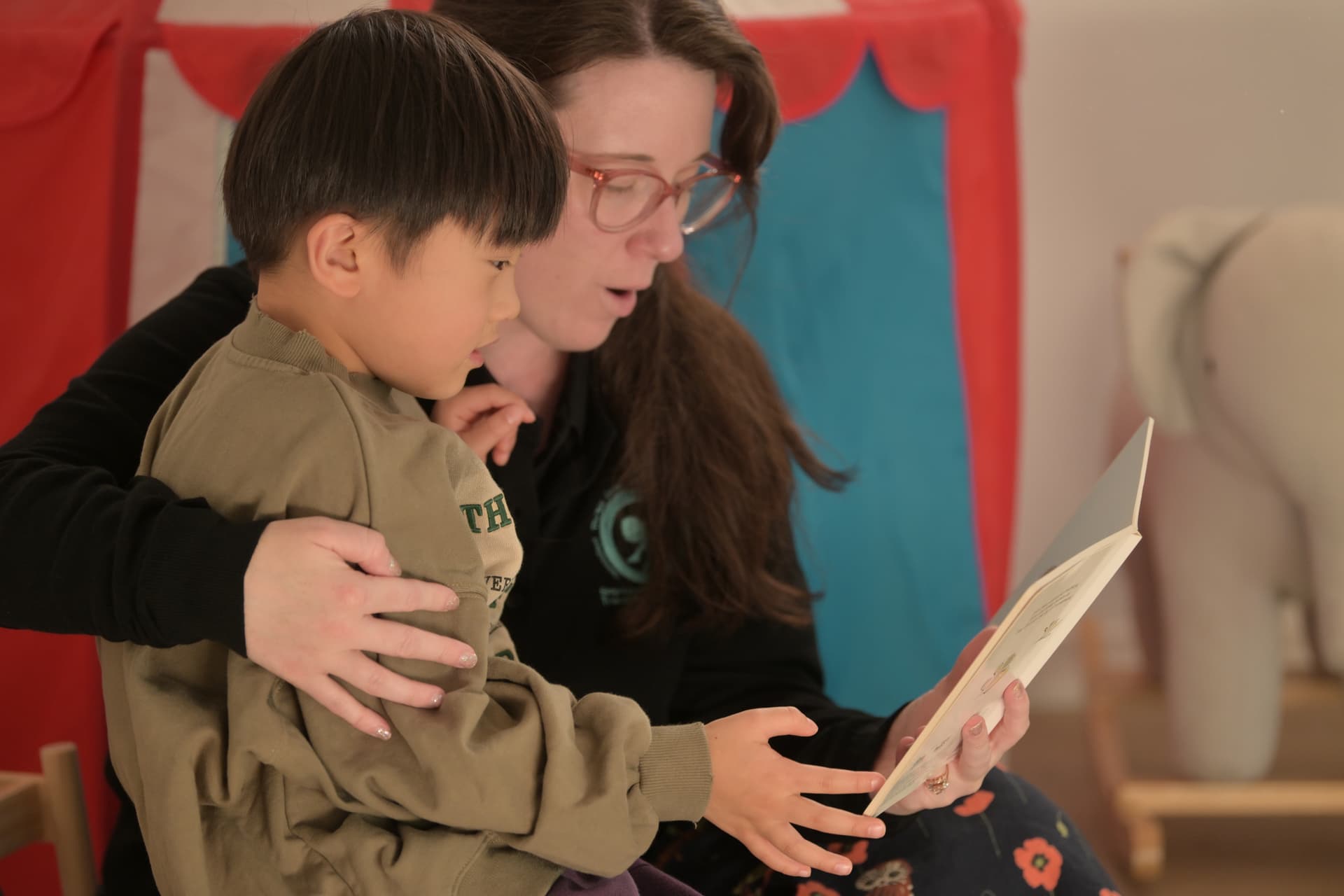
Appointment
Ready to book your first session?
We'd love to hear from you. Whether you have questions or you're ready to get started, just reach out — we're here to help.