School Readiness Checklist: Is Your Child Ready for Prep in 2027?
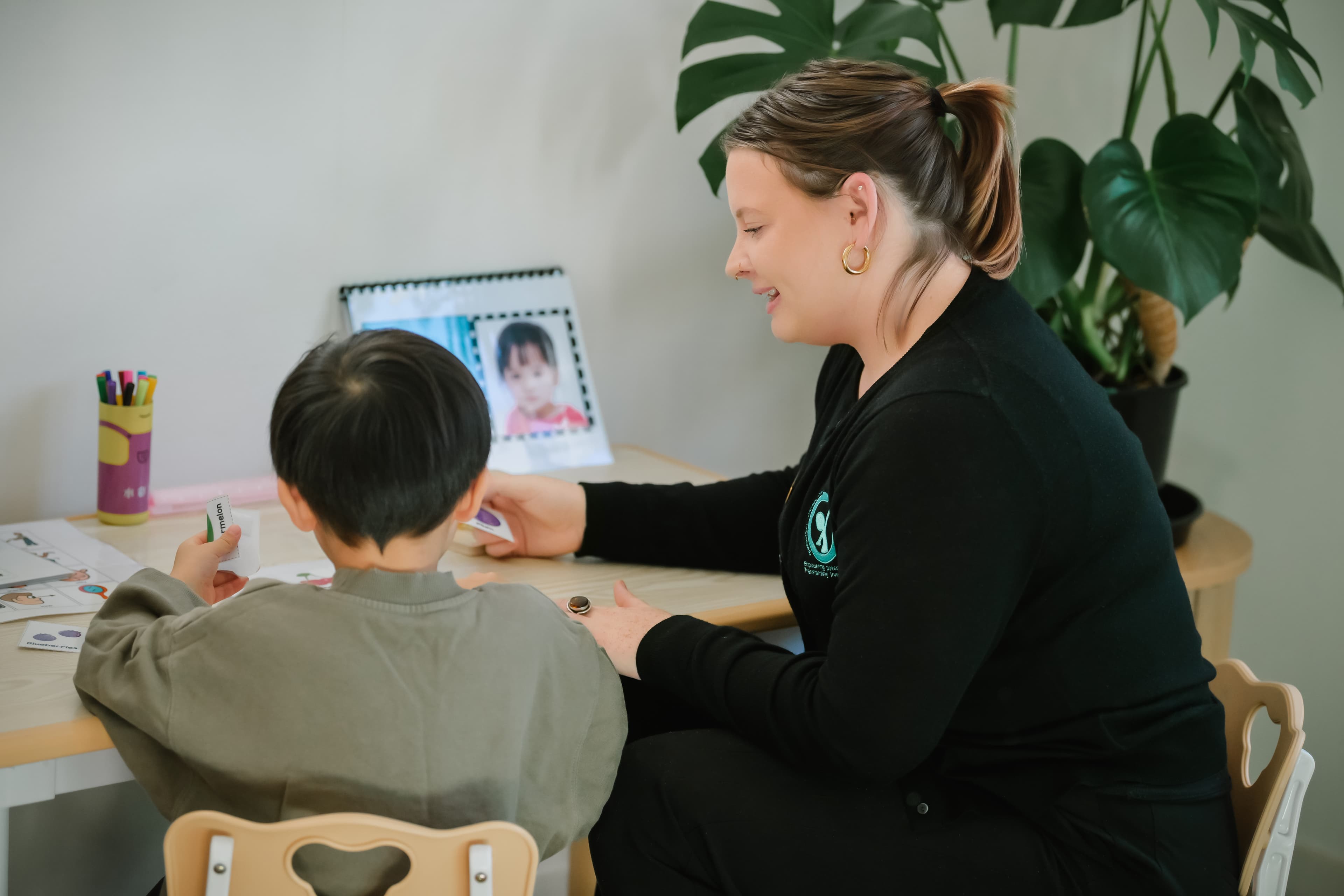
If your child was born between 1 July 2021 and 30 June 2022, they can start Prep in Queensland in 2027. Students start on Wednesday 27 January, according to the 2027 state school calendar. November is also when kindy teachers write each child's transition statement, so many parents are asking: is my child ready?
This school readiness checklist is built on Children's Health Queensland's milestones for children aged 2 to 5. It is a guide to what most children can do, not a test your child has to pass, and children develop at different rates. The dates and rules here were checked in November 2026.
Who starts Prep in 2027, and is it compulsory?
Prep is the first year of school in Queensland. Children must be 5 by 30 June in the year they start. Prep is full time, Monday to Friday, generally from 9am to 3pm.
Prep is compulsory before Year 1, but you can delay it by one year. Your child must be enrolled in school by 6 years and 6 months.
Kindy is the year before Prep, for children who turn 4 by 30 June. It isn't compulsory, and it is free for eligible-aged children in an approved Free Kindy program, for 15 hours a week, 40 weeks a year.
To enrol in Prep at a state school, contact your chosen school the year before. State schools have no Prep waiting lists, though some have catchment areas. Catholic and independent schools usually take applications up to 2 years ahead.
What does "school ready" really mean?
There is no official list of skills every child needs before Prep. Australia's Early Years Learning Framework and Queensland's kindergarten learning guideline don't even use the words "school readiness". They talk about transitions, where families, kindy educators and schools all play a part.
A 2008 policy brief from the Royal Children's Hospital's Centre for Community Child Health sums up the research with this equation: "Ready families + Ready early childhood services + Ready communities + Ready schools = Ready children."
The closest Queensland has to a readiness list is for early entry to Prep. A principal looks at aptitude and ability, social and emotional competence, physical development, and knowledge and understanding. If you'd like help with skills like communication, fine motor or self-care, you can read about our school readiness support in Brisbane.
How to use this school readiness checklist
Children's Health Queensland's milestones show what most children (3 in 4 or more) can do by each age. If your child can't do something by the age listed, it's worth asking your GP or child health nurse about it. It doesn't mean they have failed. The "worth asking about" notes in each section come from Raising Children Network. The checklist itself says it "is not a screening or diagnostic tool".
A child born in June can be almost a year younger than a July-born classmate, so compare your child with the list for their own age.
Needing help in one area is common. In 2024, 25.4% of Queensland children (about 1 in 4) were "developmentally vulnerable" in at least one area in their first year of school. That is the Australian Early Development Census (AEDC) term for scoring in the lowest 10% in an area, compared with the 2009 scores. Nationally it was 23.5%. The AEDC is a population measure, not a test of your child: teachers fill it in for each child, and the results are reported for groups of children.
Self-care and independence
Most children (3 in 4 or more) can do these by 4:
- are toilet trained during the day;
- serve themselves food or pour water, with an adult watching;
- undo some buttons by themselves.
By 5, most children can do some buttons up too. Before Prep, the Queensland Government suggests practising:
- packing and carrying their own school bag, and putting on their shoes;
- eating and drinking without help, and going to the toilet on their own;
- using tissues to blow their nose;
- recognising their own belongings;
- opening their lunch box and wrapped food.
Worth asking about: difficulty eating, dressing or using the toilet at 4, or daytime wetting or soiling at 5 to 6. Night-time wetting is typical up to 6 or 7.
Talking, listening and understanding
Most children can do these by 4:
- answer simple questions, like "what is a crayon for?";
- say sentences of more than 4 words;
- talk about at least one thing that happened during the day;
- say many sounds correctly, and other people understand what they say all of the time.
By 5, most children:
- use or recognise simple rhymes, like bat and cat;
- keep a conversation going for more than three back-and-forth turns;
- tell a story where at least two things happen;
- answer simple questions about a book or story.
Speech Pathology Australia adds that 5-year-olds can usually follow three-part instructions, like "put on your shoes, get your backpack and line up outside". Sounds like s, r, l and th can still be hard at 5.
Worth asking about: at 4, not using sentences of 4 or more words, not talking about their day, or not understanding 2-part instructions. At 5, trouble having a conversation. Our article on signs your child may benefit from speech therapy covers more.
Feelings, friends and focus
Most children can do these by 4:
- prefer playing with others to playing alone;
- comfort others who are hurt or sad;
- like to be a "helper";
- pretend to be something else during play.
By 5, most children:
- follow rules or take turns in games with other children;
- do simple chores at home, like clearing the table;
- pay attention for 5 to 10 minutes during story time or drawing.
The Queensland Government suggests talking with your child about how to ask for help, and showing them what to say.
Worth asking about: at 4, tantrums over very small things, clinging or crying when you leave, or seeming very afraid, anxious or sad a lot of the time. At 5, not playing with other children, being very aggressive, or not focusing on one activity for more than a few minutes.
Hands and bodies: fine and gross motor skills
Most children can do these by 4:
- hold a pencil between their fingers and thumb, not in a fist;
- draw a person with 3 or more body parts;
- catch a large ball most of the time.
By 5, most children:
- write some letters in their name;
- draw people with at least 6 body parts;
- hop on one foot.
Raising Children Network adds that many 4 to 5-year-olds can cut with child-safe scissors.
Worth asking about: seeming clumsy, finding it hard to handle small objects like a pencil or crayon, or having trouble drawing shapes like circles or crosses. Our article on how occupational therapy builds school readiness looks at hand skills and handwriting.
School readiness activities to try at home
"There is a lot more to getting ready for Prep than first-day photos and new uniforms," says the Queensland Government. Starting Prep depends on your child's age, not on passing a test, and Prep teaches reading and writing. Everyday ideas from the Queensland Government and Raising Children:
- read aloud, write shopping lists, sing nursery rhymes and play games together;
- practise routines, like going to bed early and leaving time to get ready in the morning;
- choose a lunch box and drink bottle with easy-to-open lids, and practise with them;
- wear new school shoes before the first day, and practise laces or buckles;
- talk through small problems, like "what will I do if my yoghurt spills?";
- listen to your child's thoughts about school, and share your positive feelings;
- go to the school's orientation, and meet other families before the first day.
Your child's kindy transition statement
In November of the kindy year, approved and funded kindy providers are expected to write a transition statement for each child and give families a copy. It sums up your child's learning in five areas: identity, connectedness, wellbeing, active learning and communicating. Parents, carers and children can all add to it.
There are two consent forms. The first lets the kindy create the statement in the Queensland Curriculum and Assessment Authority's online system. If you say no, the kindy can write it on a Word template instead. The second lets the kindy share it with your child's Prep teacher or other school staff. You can review the statement, ask for incorrect personal information to be fixed, and give it to the Prep teacher yourself if you prefer.
Thinking about delaying Prep? What Queensland allows and what research shows
In Queensland, delaying Prep is your decision. The Department of Education says "No formal documentation, assessment or approval is required for delayed entry to Prep." Principals don't decide. Older advice online may say you need a form or approval, but you don't.
Your child then starts Prep, not Year 1, the next year. Queensland's kindy funding rules allow a second funded year of kindy, decided by you and your kindy. The rules encourage meeting the kindy teacher and other professionals, such as allied health providers.
What Australian research shows:
- In a New South Wales study of 162,878 children, those older than their classmates had better development scores in their first year of school.
- In a study of Australian twins, starting later was linked to a small Year 3 edge in reading and numeracy that was gone by Year 9. In smaller extra analyses that took attention and hyperactivity into account, there was no link.
- Western Australia has the same 30 June cut-off as Queensland. There, June-born children aged 6 to 10 were about twice as likely as July-born classmates to be prescribed ADHD medication.
- Older Queensland data shows delaying was uncommon but rising, at about 2 in 100 state school students aged 5 and 6 in 2010 to 2014. Most were boys who were the youngest in their year group.
There is no single right answer. Talk it through with the kindy teacher, and with a health professional if you have a specific concern.
Do you need a school readiness assessment?
Not to delay Prep. For early entry, the principal decides using the four areas above. School staff will watch your child during activities, and may ask your permission for a screening test. But the department says "There is no requirement for external professional assessments."
An assessment by a speech pathologist or occupational therapist can be useful when you have a specific concern in one checklist area. Children's Health Queensland's advice is "Don't wait. Act early" if your child hasn't met a milestone for their age.
When to talk to a GP, child health nurse, speech pathologist or OT
Start with your child's kindy teacher. Then:
- GP or child health nurse: for a missed milestone or strong concerns. See your GP if your child loses skills they used to have. Children's Health Queensland's Child Health Service is free for children from birth to 8. You can also call 13 HEALTH (13 43 25 84) any time to talk to a child health nurse.
- Hearing: Children's Health Queensland offers free hearing screening for eligible children, with no referral needed. Clinics near Runcorn include Logan Central Community Health Centre, Mount Gravatt Child Health Service and Inala Community Health Centre.
- Vision: Children's Health Queensland nurses offer free vision screening at school in Prep.
- Speech pathologist: for talking, understanding or being understood. You don't usually need a referral to see a paediatric speech pathologist.
- Occupational therapist: for using a pencil or scissors, dressing, toileting, coordination, or coping in busy or noisy places. You don't usually need a referral to see an occupational therapist for children either.
School readiness support at Queensland Therapy Center
Starting school is one of the biggest transitions in a child's life. Our school readiness support covers social skills, communication, fine motor skills, self-care, attention and focus, and play and learning. We work closely with families and early childhood educators to identify each child's strengths and areas for development. We work with children of all abilities and backgrounds.
Our speech pathologists and occupational therapists work with children from age 2, at our Runcorn clinic or at home, kindy or school across Brisbane's southside. You don't need a referral, and we support families through the NDIS. Clients without NDIS funding are welcome. Contact us before you book and we'll tell you our current rate and what it includes.
Read more about how our team helps children get ready for school, or contact us.
Frequently asked questions
What age does my child start Prep in Queensland?
Children must be 5 by 30 June in the year they start Prep. For 2027, that means children born from 1 July 2021 to 30 June 2022. Students start on Wednesday 27 January 2027, according to the state school calendar.
Is Prep compulsory in Queensland?
Yes, before Year 1. But your child doesn't have to start in the first year they are old enough. You can delay by one year, as long as your child is enrolled in school by compulsory school age, which is 6 years and 6 months.
Can my child start Prep early?
Only in some cases. Your child must turn 5 by 31 July in the year they would start, or have started a Prep-equivalent year interstate or overseas. In both cases, the principal must be satisfied they are ready. The department calls early entry "an exception, not the rule". For state schools, it suggests asking in early September or October the year before, so for 2027, ask the school soon.
Does my child need to read before Prep?
No. Children learn speaking, listening, reading and writing in Prep. By 5, most children can name some letters when you point to them and write some letters in their name. Raising Children advises parents not to expect too much academic progress too soon once school starts.
Should I hold my child back a year?
There is no single answer. Children older than their classmates tend to have better development scores in their first year. But in one Australian study, a small reading and numeracy edge from starting later was gone by Year 9. In Queensland, the decision is yours, and a second funded kindy year is possible. Talk it over with the kindy teacher.
What if my child still has toilet accidents?
Most children are toilet trained during the day by 4, and the department expects occasional accidents with younger Prep children. If your child still wets or soils their pants during the day at 5 to 6, see your GP. Night-time wetting is typical up to 6 or 7.
Sources
- Queensland Government (qld.gov.au): Prep enrolments (last updated 4 September 2017), enrolment age requirements (last updated 18 December 2024), supporting your child with the move to Prep (last updated 9 January 2023).
- Queensland Department of Education: early and delayed entry to Prep (last updated 12 March 2026), Queensland Early Entry to Prep Framework overview (version 1.2, 2025), considerations and application process for early entry to Prep (no date shown, read 28 October 2026), About Prep (last updated 22 January 2026), enrolment (last updated 21 January 2026), 2027 school calendar, Queensland state schools and future term dates (last updated 19 June 2026), AEDC Queensland Report 2024 (2025).
- Queensland Government, early childhood (earlychildhood.qld.gov.au): kindy (last updated 21 August 2026), age requirements and enrolment (last updated 6 July 2026), kindy start-date poster (no date shown, read 28 October 2026), Free Kindy in Queensland fact sheet (no date shown, read 28 October 2026), Queensland Kindergarten Funding Essentials, Sessional Kindergartens (version 1.4, August 2026), Free Kindy FAQ for long day care services (last updated March 2026), moving to school (last updated 13 October 2026), supporting positive transitions (last updated 6 March 2026), transition statements (last updated 13 October 2026).
- Queensland Curriculum and Assessment Authority: Queensland kindergarten learning guideline 2024 (page last updated 1 August 2025; PDF), supporting transitions and continuity of learning (last updated 2 October 2025), kindergarten transition statements: information for parents and carers (August 2025).
- Australian Government Department of Education: Belonging, Being and Becoming: The Early Years Learning Framework for Australia V2.0 (2022).
- Children's Health Queensland: milestones checklist for child development 2 to 5 years (resource BR008, reviewed September 2026), Child Health Service (published 23 May 2024), community hearing screening clinics (last updated October 2026), Prep vision screening (last updated May 2026).
- Australian Early Development Census: the 2024 AEDC results have been released (13 June 2025, last updated 21 July 2025).
- Speech Pathology Australia: communication milestones poster (read 28 October 2026).
- Raising Children Network: 4 to 5 years: preschooler development, 5 to 6 years: child development, starting primary school: preparing children (all read 28 October 2026).
- healthdirect: speech pathology (last reviewed July 2026), occupational therapy (last reviewed June 2026).
- Centre for Community Child Health, Royal Children's Hospital Melbourne: Policy Brief No 10: Rethinking School Readiness (2008).
- Hanly M, Edwards B, Goldfeld S et al. School starting age and child development in a state-wide, population-level cohort of children in their first year of school in New South Wales, Australia. Early Childhood Research Quarterly, 2019. Larsen SA, Little CW, Coventry WL. Exploring the associations between delayed school entry and achievement in primary and secondary school. Child Development, 2021. Whitely M, Lester L, Phillimore J, Robinson S. Influence of birth month on the probability of Western Australian children being treated for ADHD. Medical Journal of Australia, 2017. Mergler A, Walker S. Deciding when your child is ready to start Prep. Australasian Journal of Early Childhood, 2017.
- Education Matters: parents stressed about school starting age (20 July 2017).
Written by Wenjin Zhang, Clinic Director, Board Certified Behavior Analyst and Certified Practising Speech Pathologist. Last updated November 2026. General information only, not advice for your situation.
Get Support
Ready to take the next step?
Our team is here to help. Book a session or reach out with any questions.
Contact Us
Appointment
Ready to book your first session?
We'd love to hear from you. Whether you have questions or you're ready to get started, just reach out — we're here to help.