What Does a Support Worker Do? A Guide for NDIS Participants and Families

A support worker is someone who is paid to help a person with disability with everyday life. That can mean personal care, jobs around the home, getting to appointments, joining in community and social activities, and building the skills to do more things independently. Under the NDIS, you choose who supports you, what they help with and when.
This guide explains what support workers do and don't do, how they differ from therapists, the checks and rules that apply, how NDIS plans pay for support workers in 2026, and how to find and choose the right support. It is general information, last checked in October 2026.
What is a support worker?
The NDIS describes a support worker as someone who works with people with disability. Support workers can work for a company or for themselves, and they can be registered or unregistered.
You may also hear the terms disability support worker, NDIS support worker or community support worker. They describe much the same role. What a support worker does for you depends on your goals, what you need and the supports funded in your plan.
What does a support worker do day to day?
The NDIS describes four broad areas of support, and most people use a mix:
- Personal care: help with hygiene, dressing, eating, toileting and taking medication, at the level you need. Good support respects your dignity, your privacy and the way you like things done.
- Household tasks: cleaning, cooking, laundry and yard work. Depending on your goals, a support worker may do a task with you rather than for you, so you can do more of it yourself over time.
- Daily activities: shopping, errands, getting around and going to medical appointments.
- Community access and social participation: going to social events, clubs, classes, sport or local activities, such as a craft group or a weekend market.
Support workers can also help you build life skills. The NDIS supports list includes training to become more independent with shopping, preparing meals, managing money, using public transport, and social and relationship skills. The NDIS also gives the example of a support worker helping someone apply for a rental property.
What support workers don't do
Support workers are not health professionals, and some tasks sit outside their role:
- Therapy. Assessing, diagnosing and planning therapy is the job of allied health professionals. The NDIS says only qualified allied health professionals, registered with Ahpra or accredited by their professional body, can deliver therapy supports.
- Clinical care, unless specifically trained. Some participants need high intensity daily personal activities, such as complex bowel care, tube feeding, severe swallowing difficulties (dysphagia), tracheostomy, catheter or ventilator care, subcutaneous injections or complex wound care. Under the NDIS Practice Standards, workers need training for that person's needs from a qualified health practitioner or someone who meets the official skills descriptor (for severe dysphagia, only a qualified health practitioner). Registered providers can only offer the high intensity supports listed on their registration.
- Decisions about your life. The NDIS Code of Conduct requires workers to respect your right to make your own decisions.
- Paying for the activity itself. For social and recreation activities, the NDIS may fund a support worker to help you take part, but you usually pay the general costs everyone pays, such as entry fees and memberships.
Support worker or therapist: what's the difference?
Both can be part of the same plan, but they do different jobs.
- Therapists such as occupational therapists, speech pathologists and behaviour support practitioners assess your needs, work with you on goals, design programs and check progress. Our guide to what a speech pathologist does explains one example. Therapy is usually funded from the Capacity Building budget, under Improved daily living (behaviour support sits under Improved relationships).
- Support workers help with daily life and community participation, and can help you practise everyday skills, such as cooking or catching the bus. They are usually funded from the Core supports budget.
The checks and rules that apply
NDIS Worker Screening Check. This check is done by a state or territory worker screening unit (in Queensland, Disability Worker Screening) on behalf of the NDIS Quality and Safeguards Commission (the NDIS Commission). It decides whether a worker is cleared or excluded from certain roles with people with disability. A clearance lasts up to 5 years and is recognised nationally.
Registered providers must make sure workers in risk-assessed roles have a clearance. These include roles that involve physically touching a person with disability, or building a rapport with them as a normal part of the job. If you use an unregistered provider or employ workers directly, there is no rule that workers must be screened, but you have the right to only accept workers with a current clearance, and the NDIS Commission recommends it. Self-managed participants can check a worker's status through the NDIS Worker Screening Database.
NDIS Code of Conduct. Every NDIS provider and worker must follow the Code of Conduct, registered or not. It requires them to:
- respect your rights to freedom of expression, self-determination and decision-making;
- respect your privacy;
- provide supports safely and competently, with care and skill;
- act with integrity, honesty and transparency;
- promptly raise and act on concerns about the quality and safety of supports;
- take all reasonable steps to prevent and respond to violence, exploitation, neglect, abuse and sexual misconduct;
- not charge NDIS participants higher prices without a reasonable justification.
NDIS Practice Standards. Registered providers have been audited against the NDIS Practice Standards and assessed by the NDIS Commission as suitable. The Practice Standards set out the quality you can expect from a registered provider, and their staff must complete the NDIS Commission's worker orientation module.
If something goes wrong. If you feel comfortable, raise a concern with your provider first. You can also contact the NDIS Commission on 1800 035 544. In an emergency, call 000.
How an NDIS plan pays for a support worker
Support workers are usually paid from the Core supports budget, which is flexible: you can use it across its categories in line with your plan. Two Core categories pay for support workers:
- Assistance with daily life: help with everyday tasks such as cleaning, yard maintenance, cooking and personal care.
- Assistance with social, economic and community participation (some NDIS pages call it assistance with social and community participation): help to take part in your community and personal interests.
Some Capacity Building categories can also include support worker time, such as Increased social and community participation (help to join community and hobby groups, sport or recreation). Capacity Building funding is stated, so it can only be spent on the supports it was given for.
There is no set amount of support worker time. The NDIA funds supports that are reasonable and necessary for you. For children, it also considers what parents would usually provide at that age. Our guide to navigating NDIS funding for your child's therapy explains how plans work for families.
How prices work. The NDIS Pricing Schedule 2026-27 (effective 24 September 2026) sets maximum prices. They differ by the complexity of the support, location, the day and time, and whether the support is shared by a group. These maximum prices apply when your plan is NDIA-managed or plan-managed: providers can't charge more, and you can agree on a lower price. If you self-manage, they don't apply, and you can negotiate prices above or below them. The NDIS pricing page has the current schedule.
What changed in 2026
For plans created or reassessed from 1 October 2026, and plans renewed from 1 February 2027, the NDIA reduces the funding available for social, economic and community participation supports by 50%, and for improved daily living skills supports by 10%. This includes the Core category above that pays support workers for community and social activities. The effect differs for each person, partly because many people don't spend their whole budget.
- What isn't affected: help at home with eating, drinking, dressing, toileting, laundry, cleaning and medication, and some supports within the reduced categories, including high intensity supports and supports in employment.
- Timing: you can keep using your current plan until it is reassessed or renewed, and your new plan will show the funding available after the change.
- Reviews: the reduction is not a reviewable decision, and the reduction on its own doesn't count as a significant change for a reassessment. Eligible participants with 24-hour support needs can ask for a plan variation.
Our article on NDIS funding for autism covers the other 2026 changes.
How to find and choose a support worker
How your plan is managed decides who you can use:
- NDIA-managed: you must use a registered provider.
- Plan-managed or self-managed: you can usually use registered or unregistered providers. Some supports always need a registered provider, including supported independent living (SIL), specialist disability accommodation, specialist behaviour support and plan management. Mandatory registration for SIL and for NDIS digital platforms (apps or websites that connect participants with supports and process payments from NDIS plans) started on 1 July 2026, with transitional arrangements.
- Self-managed: you can also employ or contract workers directly.
To find support, ask your my NDIS contact or support coordinator, ask people you trust, or search the NDIS provider finder by suburb. The NDIS Commission's Provider Register shows which providers are registered, and which have been banned or had their registration revoked.
Meet a provider before you start. The NDIS recommends a service agreement that sets out what supports you'll get, what they cost, how the provider is paid, how to change the agreement and what happens if something goes wrong.
Questions to ask a provider
- Are you a registered NDIS provider?
- Do your workers have a current NDIS Worker Screening clearance?
- Can I meet a worker before support starts, and change workers if it isn't working?
- Will I usually see the same worker or small group of workers?
- What training do your workers have for my needs?
- What will it cost, and are there minimum shift lengths, cancellation terms or travel charges?
- How do you handle complaints and incidents?
- How will you work with my therapists and support coordinator?
Support workers at Queensland Therapy Center
Queensland Therapy Center is a registered NDIS provider in Runcorn, on Brisbane's southside. We work with participants whose plans are NDIA-managed, plan-managed or self-managed.
Our community support workers help NDIS participants with daily living, personal care that respects dignity and independence, household tasks, life skills such as using transport, cooking and budgeting, and community access, including appointments, errands and local activities. Because our team also includes speech pathologists, occupational therapists and behaviour support, support workers can work alongside a person's therapy goals, with their consent.
Support coordinators can use our referral form. If you'd like to talk about support for yourself or someone you care for, contact our team.
Frequently asked questions
Is a support worker the same as a carer?
No. Under Australian Government definitions, a carer is a family member or friend who provides care and support. Someone who is employed to look after a person isn't counted as a carer.
Can a support worker help with medication?
Yes. The NDIS lists help taking medication as part of personal care. Tasks such as subcutaneous injections are high intensity supports and need specific training first.
Can a family member be my paid support worker?
Usually not. The NDIA says it generally doesn't fund family members to provide NDIS supports, and only considers it in very limited situations.
Do I have to use a registered provider?
Only if your funding is NDIA-managed, or for supports that always need registration, such as SIL. Plan-managed and self-managed participants can usually choose.
Can I change my support worker?
Yes. The NDIS says you choose who you work with and when. Ask your provider how a change of worker is handled, and check your service agreement.
Can children have a support worker?
Yes, if it meets the NDIS funding criteria. The NDIA considers what parents usually provide at that age. For example, it doesn't fund support for a young child at social or recreation activities where parents would normally be expected to stay.
What is the difference between a support worker and a support coordinator?
A support worker helps with daily life and activities. A support coordinator helps you understand and use your plan, and find and manage your providers.
Sources
- NDIS: What is a support worker, core supports, capacity building supports, therapy supports, how to find and choose a provider, service agreements, self-managed funding, pricing arrangements, changes to support budgets from 1 October, NDIS supports list, reasonable and necessary supports, social and recreation supports.
- NDIS Quality and Safeguards Commission: worker screening, worker screening for participants, worker screening for registered providers, NDIS Code of Conduct, NDIS Practice Standards, high intensity daily personal activities, about registration, mandatory registration, Provider Register, report a concern.
- Department of Health, Disability and Ageing: funding changes for NDIS supports.
- Queensland Government: Disability Worker Screening.
- Carer Gateway: who are carers.
Written by Wenjin Zhang, Clinic Director, Board Certified Behavior Analyst and Certified Practising Speech Pathologist. Last updated October 2026. General information only, not advice for your situation.
Get Support
Ready to take the next step?
Our team is here to help. Book a session or reach out with any questions.
Contact Us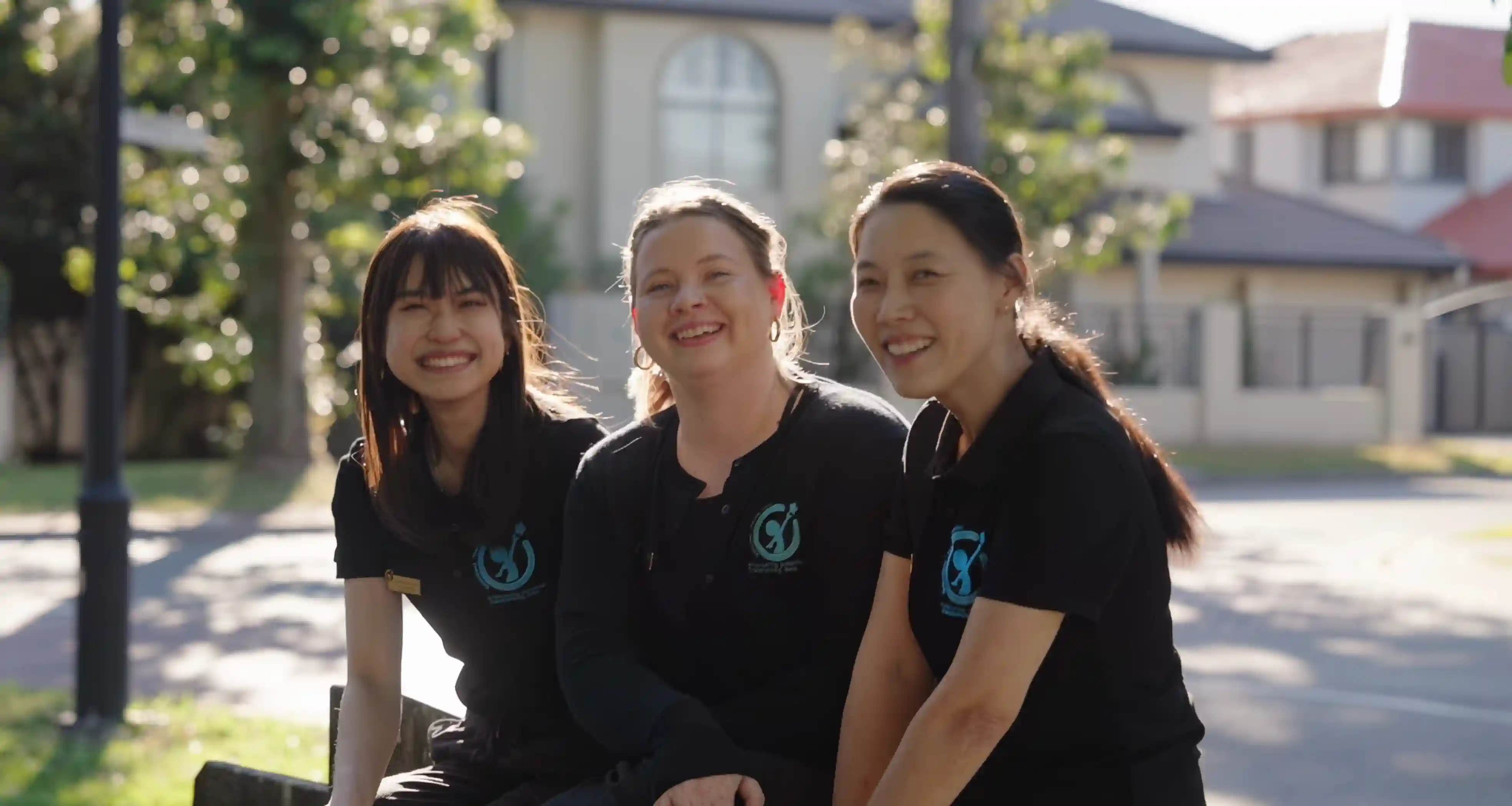

Appointment
Ready to book your first session?
We'd love to hear from you. Whether you have questions or you're ready to get started, just reach out — we're here to help.