What Does an Occupational Therapist Do for a Child? A Parent's Guide to Paediatric OT
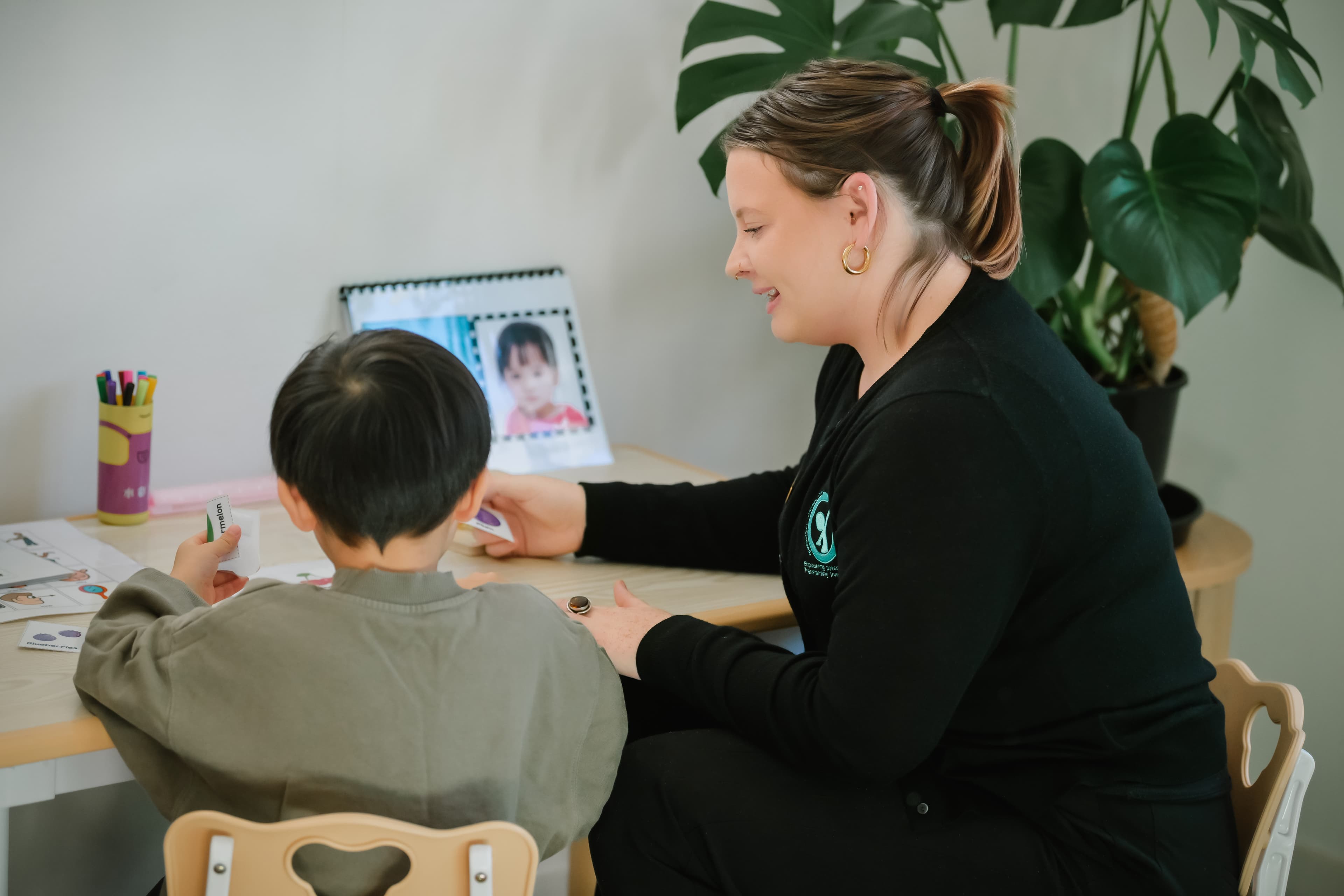
Has a teacher, GP or kindy suggested occupational therapy for your child? Or are you wondering if it could help? An occupational therapist (OT) helps a child do the everyday things they need and want to do. That includes getting dressed, using a pencil, playing with others and coping with a busy day.
This guide explains what an occupational therapist does for a child at each age, and what happens in a session. It also covers your role as a parent, OT at kindy and school in Queensland, and what the research says. It is general information, as at November 2026.
What does an occupational therapist do for a child?
Occupational therapists are university-trained health professionals. They help people get better at the everyday things they want or need to do.
In OT, "occupation" means more than a job. Occupational Therapy Australia (OTA) says it means everything you need, want or hope to do in your day. For a child, OTA lists play, self-care (looking after themselves), education, social interaction and leisure.
An OT works out what is getting in the way of these activities. Then, as healthdirect describes, an OT helps in a few ways:
- Build the skill. Your child builds knowledge and skills.
- Change the task. The OT finds a new way to do it.
- Change the space or the tools. The OT changes the surroundings or suggests equipment.
OTs also work with the adults around a child. OTA's framework for OTs who work with children describes families as partners in decisions.
For adults, costs and how to check an OT's qualifications, see our general guide to what an occupational therapist does.
What is paediatric occupational therapy?
Paediatric occupational therapy is OT for children and young people. "Paediatric" means to do with children.
In Australia, there is no separate registration for paediatric OTs. OTA says working with children is within the scope of all registered occupational therapists.
Here is what is required:
- Every OT must be registered with the Occupational Therapy Board of Australia to practise.
- "Occupational therapist" is a protected title. It is an offence to use it if you are not registered.
- You can look up any OT on the national Register of practitioners.
At 30 June 2026, about 36,800 OTs were registered in Australia, about 7,600 of them in Queensland.
You may also meet an allied health assistant, sometimes called an OT assistant. Assistants work under the supervision of a qualified OT. They cannot complete assessments or make recommendations.
For a local service, read about our paediatric occupational therapy in Brisbane.
Why would a child see an OT?
Usually, a child sees an OT because an everyday task is hard for them. It helps to think about the task, not the label. Common examples are:
- getting dressed, eating, washing and cleaning teeth;
- using a pencil or scissors, and handwriting;
- running, jumping, catching a ball or riding a bike;
- coping with noise, touch and busy places;
- managing big feelings and following routines;
- playing and joining in with other children;
- organising belongings and schoolwork.
Play and social interaction are part of an OT's work, so an OT can help with social skills too.
Raising Children Network lists many reasons a child might see an OT. They include injury or illness, emotional challenges, autism, learning difficulties, developmental delay (being slower than expected to develop skills), intellectual disability and physical disability.
Another reason is developmental coordination disorder (DCD). DCD causes problems with movement and coordination. It can make tasks such as dressing, neat writing, running or riding a bike hard. Raising Children Network says it affects 5 to 6 in every 100 children.
We have separate guides to occupational therapy for autistic children and sensory processing differences.
What an OT works on at each age
For ages 2 to 5, the examples below come from the Children's Health Queensland milestones checklist. Milestones are skills that most children (3 in 4 or more) can do by a certain age. The checklist says it is not a screening or diagnostic tool, so a gap is something to ask about, not a verdict.
Toddlers, 2 to 3. By 2, most children eat with a spoon, run and kick a ball. By 3, most use a fork, put on some loose clothes and have started toilet training. An OT might work on self-care like eating and dressing, early drawing and play. Australia's national best-practice guide for families of young children with developmental concerns says children learn best through daily routines, like mealtimes, play and getting dressed.
Kindy age, 3 to 5. By 4, most children hold a pencil between their fingers and thumb, not in a fist. Most can undo some buttons and catch a large ball most of the time. By 5, most can hop on one foot, do up some buttons and write some letters in their name. Most can follow rules or take turns in games, and pay attention for 5 to 10 minutes at story time. An OT might work on holding a pencil, buttons, ball skills and taking turns. Our article on how OT builds school readiness has more.
Primary school, 5 to 12. One research review notes that handwriting difficulties are among the most common reasons children are referred to OT. Raising Children Network says children learn to form letters, space words and write on a line in the first 2 years of school. An OT might also work on using the playground safely, managing emotions in class, joining group activities, following routines and organising belongings.
Teenagers. For teenagers, goals might be about self-care, study, work or taking part in the community.
What happens in a paediatric OT session?
Goals come first. OTA's framework says goals should be set together with you and your child, based on what matters most to your family. An OT may ask what your child can do, what they struggle with and what they want to do.
Then comes the assessment. The OT may talk with you, watch your child do everyday tasks and use standard tests. Where possible, this happens where the task happens, so a school task is looked at in school.
Sessions for young children look like play. The national guide says support for young children should go at the child's pace, through play.
The OT may have your child practise the real task. They might break it into small steps. They aim to set the challenge at a level that is just right, so your child succeeds while solving problems for themselves.
Or the OT may change the task or the tools. For handwriting, that could mean a pencil grip, an angled writing board or paper with bold lines. A stable chair and a desk at about belly-button height can help too.
Progress is checked against the goals. OTA says OTs should measure change wherever possible. The national guide says families and professionals should check progress regularly.
Where OT happens: clinic, home, kindy and school
OTs work in private clinics, homes, schools and preschools, community health centres and hospitals.
OTA's framework describes support in the places where a child spends their day, including school, as best practice. The national guide says it is most effective for young children to see a professional at home, at preschool (kindy) or even in the playground. If sessions are in an office, the professional still supports routines at home.
OT in Queensland state schools. State schools have an occupational therapy and physiotherapy service for students with disability. The Department of Education says it is not delivered the way private or hospital OT is:
- There is no cost to the family.
- It is arranged through the school. You can raise it with your child's class teacher.
- Most of the time, your child will not have one-on-one therapy sessions.
- The therapist often works with school staff to change learning activities, equipment or the classroom.
This covers state schools only.
Other OTs at school. OTA says OTs can also come to a school through outside funding, such as the NDIS. They mostly focus on individual students, and still work with teachers and families.
Your role as a parent
You are the expert on your child. OTA's framework and the national guide both say families should be part of the decisions about their child's support.
What happens between sessions matters. A 2019 Australian review looked at research on OT for children with disabilities. It says an OT working in partnership with parents is effective. Within that partnership, evidence suggests therapy delivered by parents at home is as effective as therapy delivered by a therapist. It also says home programs are an effective way to add practice.
Practice can be part of your day. An information sheet from The Children's Hospital at Westmead, written about coordination disorder (DCD), gives an example. It is setting aside 10 minutes each morning to practise tying shoelaces before school. The national guide says family time and rest matter just as much, and that it's okay to take breaks from appointments.
Questions healthdirect suggests asking an OT:
- how OT can help;
- which skills you will focus on;
- how long it may take to see improvement;
- how many sessions may be needed.
What the research says works, and how long OT takes
The 2019 Australian review covered 129 research papers. The well-supported approaches that practise everyday activities had four things in common:
- They start with the child's own goal.
- They practise real-life activities in everyday settings.
- They use lots of practice, including practice at home.
- They set the challenge at a level that is just right.
Older approaches, which try to fix an underlying body function first, had weaker results.
The review has limits. It is from 2019, and it is about children with disabilities. It does not say how much therapy is enough.
Other research gives examples of how much practice was used. They are examples from studies, not a recommended amount for your child:
- Handwriting. A 2011 review of 11 studies found that programs with no handwriting practice did not work. Nor did programs with fewer than 20 practice sessions.
- Coordination disorder. The Westmead sheet says three approaches it recommends need 12, 14 and 20 hours of practice to achieve results. It also says how often a child sees an OT depends on the child's goals. International recommendations from 2019 say fairly short programs of about 10 sessions showed positive effects.
The research has gaps too. A 2017 review of 15 studies looked at therapy that practises the task itself, for children with coordination disorder. One set of combined results showed better movement skills, and another showed no effect. The authors rated the evidence as low to very low quality.
The Westmead sheet also says not all therapies have been researched or shown to work. For children with coordination disorder, it says a therapy called sensory integration therapy should not be used.
So how long does OT take? The research gives no single answer. The NDIS says the skill-building therapy it funds has goals, outcomes and a timeframe, and that people are likely to need less over time.
OT, physio, speech pathologist or psychologist: who helps with what?
Children's Health Queensland describes each role in a line:
- An occupational therapist understands how children do everyday activities, like play and learning.
- A physiotherapist (physio) understands how children move.
- A speech pathologist understands how children talk, understand words and eat.
- A psychologist understands behaviour, emotions and thinking.
The national guide says it can be good to start with one professional, and add others only if needed.
How to get started in Queensland
- If you're not sure. Talk to your GP or child health nurse, or call 13 HEALTH and ask for a child health nurse. The Children's Health Queensland checklist says to act early if a milestone is missed.
- Private OT. You don't need a referral to see an OT. You will need a doctor's referral if you plan to claim costs through some government funding, such as Medicare.
- The public service. Children's Health Queensland's Child Development Service offers assessment and diagnosis for children aged 0 to 9. It is for children with significant differences in 2 or more areas of development. Ask your GP about a referral.
- The NDIS. The NDIS early childhood approach is for children younger than 9 with delays in development or disability. Our guides explain early intervention and the NDIS early childhood approach in Queensland and what the NDIS funds for therapy.
- Costs. Medicare, the NDIS and private health insurance can help with costs in some situations.
Paediatric OT at Queensland Therapy Center
Our paediatric OT team works with children from age 2. OT for children is play-based, so sessions feel like play while building the skills underneath.
We see children at our clinic in Runcorn, or at home, school or kindy across Brisbane's southside. You don't need a referral to book, and we support families through the NDIS. Private clients are welcome. Contact us before you book and we'll tell you our current rate and what it includes.
Read more about children's occupational therapy at our Runcorn clinic.
Frequently asked questions
Why would a child need an occupational therapist?
Usually because an everyday task is hard for them. It could be self-care, hand skills like using a pencil, movement, coping with noise or big feelings, or joining in with other children.
How do I know if my child needs to see an OT?
Notice which everyday tasks are hard. For ages 2 to 5, you can compare with the Children's Health Queensland milestones checklist. Then talk with your GP, child health nurse or early childhood educator. The checklist says to act early if a milestone is missed.
Is OT only for autistic children?
No. Raising Children Network lists many reasons a child might see an OT. They include injury or illness, learning difficulties, developmental delay and physical disability, as well as autism.
Does my child need a referral to see an OT?
No. You can see an OT without a referral. You will need a doctor's referral if you plan to claim costs through some government funding, such as Medicare. The public Child Development Service also needs a referral, so ask your GP.
Can an occupational therapist diagnose my child?
An OT assesses how your child manages everyday tasks. In an assessment for a diagnosis, OTA's framework says the OT works as part of a team and contributes to the process. If you are wondering about a diagnosis, start with your GP or a paediatrician (a children's doctor).
What are the downsides of occupational therapy?
OT takes time, practice at home and money, and costs vary. The research is also uneven. Some approaches are well supported, and others have not been researched or shown to work. Ask what the goal is and how progress will be measured.
How long will my child need OT?
The research gives no single answer, and it depends on your child's goals. As an example only, international recommendations on coordination disorder say fairly short programs of about 10 sessions showed positive effects. That is a research finding, not a plan for your child. Ask your OT how long it may take, and review progress together.
Sources
- Raising Children Network: Occupational therapist: family guide, last updated or reviewed 6 January 2025, read 19 November 2026.
- Raising Children Network: Handwriting in children: why it matters, how it develops and how to help, last updated or reviewed 23 June 2026, read 19 November 2026.
- Raising Children Network: Developmental coordination disorder (DCD), last updated or reviewed 22 April 2025, read 19 November 2026.
- Raising Children Network: Developmental delay, last updated or reviewed 1 October 2026, read 19 November 2026.
- healthdirect: Occupational therapy, last reviewed June 2026.
- Occupational Therapy Australia: What is Occupational Therapy, no date shown, read 19 November 2026.
- Occupational Therapy Australia: Capability framework for occupational therapists working with children, young people and families, published 12 February 2025, and the framework document (PDF), 2025.
- Occupational Therapy Australia: Understanding occupational therapy in education (flyer), published 14 August 2025.
- Occupational Therapy Australia: FAQ: Allied Health Assistants, published 8 May 2025.
- Occupational Therapy Board of Australia: Registration, no date shown, read 19 November 2026.
- Occupational Therapy Board of Australia: Statistics, page reviewed 24 September 2026, and its registrant data for 1 April to 30 June 2026 (PDF).
- Ahpra: Ahpra FAQ, page reviewed 21 January 2022.
- Ahpra: Professions and Divisions, page reviewed 11 April 2025.
- Ahpra: Register of practitioners, read 19 November 2026.
- Children's Health Queensland: Milestones checklist for child development 2 to 5 years (PDF), reviewed September 2026.
- Children's Health Queensland: Child development service, no date shown, read 19 November 2026.
- Children's Health Queensland: Child Development Program flyer (PDF), updated October 2022.
- Queensland Department of Education: Occupational therapy and physiotherapy services: Information for parents (PDF), no date shown, read 19 November 2026.
- The Children's Hospital at Westmead (Sydney Children's Hospitals Network): Occupational therapy for children with developmental coordination disorder (DCD) information sheet, last updated 7 May 2026.
- University of Melbourne, for the Australian Government: National Best Practice Framework for Early Childhood Intervention: A guide for families (PDF), 2025.
- NDIS: Guide to the early childhood approach, current as of 11 September 2026.
- NDIS: What are therapy supports, current as of 17 July 2026.
- Novak I, Honan I: Effectiveness of paediatric occupational therapy for children with disabilities: a systematic review, Australian Occupational Therapy Journal, 2019.
- Blank R and others: International clinical practice recommendations on the definition, diagnosis, assessment, intervention, and psychosocial aspects of developmental coordination disorder, Developmental Medicine and Child Neurology, 2019.
- Miyahara M, Hillier SL, Pridham L, Nakagawa S: Task-oriented interventions for children with developmental co-ordination disorder, Cochrane Database of Systematic Reviews, 2017 (abstract only).
- Hoy MM, Egan MY, Feder KP: A systematic review of interventions to improve handwriting, Canadian Journal of Occupational Therapy, 2011 (abstract only).
Written by Wenjin Zhang, Clinic Director, Board Certified Behavior Analyst and Certified Practising Speech Pathologist. Last updated November 2026. General information only, not advice for your situation.
Get Support
Ready to take the next step?
Our team is here to help. Book a session or reach out with any questions.
Contact Us

Appointment
Ready to book your first session?
We'd love to hear from you. Whether you have questions or you're ready to get started, just reach out — we're here to help.